 | |
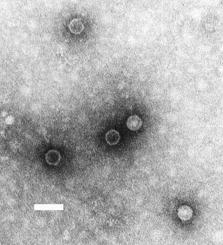
| Photo Credit: F.P. Williams, U.S. EPA These images are in the public domain and are thus free of any copyright restrictions. For public domain images, permission is not required for their use but we do ask that you credit the EPA and the contributors (found in the Photo Credit line) whenever an image is used in any publicly distributed media. |
29 August 2011 - A wild poliovirus was confirmed in China. The Ministry of Health has informed WHO about this wild poliovirus type 1 (WPV1) has been isolated from four young children with ages between four months and two years, with onset of paralysis between 3 and 27 July 2011. All four cases are reported to be from Hetian prefecture, Xinjiang Uygur autonomous region, China.
The genetic sequencing of the said virus indicates that they are genetically related to viruses currently circulating in Pakistan. A group of clinicians, laboratory experts and epidemiologists and public health experts has been dispatched to the affected regions to further investigate and plan response activities.
The local public health authorities in Xinjiang autonomous region are currently conducting an epidemiological investigation that includes collection of stool specimens from contacts and evaluation of vaccine coverage.
The Ministry of Health in China plans to conduct an initial response vaccination campaign in early September, targeting 4.5 million children aged under 15 years in the immediate outbreak area, and children aged under 5 years in adjacent prefectures. Moreover, the Ministry of Health in China and the provincial government have finalized plans for supplementary immunization activities. In a province-wide vaccination campaign, 3.8 million children will be targeted with two rounds of polio immunization. Six of the 14 prefectures in the province, including the provincial capital of Urumqi, will target children under 15 years of age, while the other prefectures will target children under 5 years of age. The map below shows the extend of the upcoming vaccination campaign to take place 8-12 September 2011 and 8-12 October 2011.
What is Poliomyelitis?
Poliomyelitis (polio) is a highly infectious disease caused by a virus that invades the nervous system. It can cause crippling paralysis, sometimes in a matter of hours. Polio generally affects children under the age of three, but adults can contract it as well.
The virus enters the body through the mouth and multiplies in the intestine. Initial symptoms include fever, weakness, headache, vomiting and pain in the limbs. A lifelong paralysis can set in quickly. Among those paralyzed, 5%-10% die when their breathing muscles become immobilized. Many of those infected with the virus will show no symptoms at all but can pass the virus on to others.
Polio is incurable but it can easily be prevented through immunization. Polio vaccine, given multiple times, almost always protects a child for life. Through quality vaccination and disease-reporting (surveillance) systems, the Western Pacific Region has been polio-free since 19 March 1997 when the Region’s last case caused by an indigenous (locally circulating) poliovirus was reported in Cambodia. Polio continues to occur in other parts of the world.
Once established in the intestines, poliovirus can enter the blood stream and invade the central nervous system—spreading along nerve fibres. As it multiplies, the virus destroys nerve cells (motor neurons), which activate muscles. These nerve cells cannot be regenerated and the affected muscles no longer function. The muscles of the legs are affected more often than the arm muscles. The limb becomes floppy and lifeless - a condition known as acute flaccid paralysis (AFP).
Two types of vaccine against polio are available. The first is a live attenuated (weakened) oral polio vaccine (OPV), which was developed by Dr Albert Sabin in 1961. OPV is given orally and its action is two-pronged: OPV produces antibodies in the blood ('humoral' or serum immunity) to all three types of poliovirus. In the event of infection, this will protect the individual against polio paralysis by preventing the spread of poliovirus to the nervous system. OPV also produces a local immune response in the lining ('mucous membrane') of the intestines—the primary site for poliovirus multiplication. The antibodies limit the multiplication of 'wild' (naturally occurring) virus inside the gut, preventing effective infection.
The unique ability of OPV to induce this intestinal, local immunity is probably responsible for the extraordinary effect of OPV mass campaigns in interrupting wild poliovirus transmission. Due to these advantages, OPV remains the vaccine of choice for the eradication of polio.
The second type, the inactivated polio vaccine (IPV), was developed in 1955 by Dr Jonas Salk. IPV is used primarily in countries where the wild poliovirus has already been eliminated. It has to be injected by a trained health worker.
WHO recommends that polio vaccine be given at birth (in areas where polio is still endemic), at six weeks, 10 weeks and 14 weeks.
The genetic sequencing of the said virus indicates that they are genetically related to viruses currently circulating in Pakistan. A group of clinicians, laboratory experts and epidemiologists and public health experts has been dispatched to the affected regions to further investigate and plan response activities.
The local public health authorities in Xinjiang autonomous region are currently conducting an epidemiological investigation that includes collection of stool specimens from contacts and evaluation of vaccine coverage.
The Ministry of Health in China plans to conduct an initial response vaccination campaign in early September, targeting 4.5 million children aged under 15 years in the immediate outbreak area, and children aged under 5 years in adjacent prefectures. Moreover, the Ministry of Health in China and the provincial government have finalized plans for supplementary immunization activities. In a province-wide vaccination campaign, 3.8 million children will be targeted with two rounds of polio immunization. Six of the 14 prefectures in the province, including the provincial capital of Urumqi, will target children under 15 years of age, while the other prefectures will target children under 5 years of age. The map below shows the extend of the upcoming vaccination campaign to take place 8-12 September 2011 and 8-12 October 2011.
What is Poliomyelitis?
Poliomyelitis (polio) is a highly infectious disease caused by a virus that invades the nervous system. It can cause crippling paralysis, sometimes in a matter of hours. Polio generally affects children under the age of three, but adults can contract it as well.
The virus enters the body through the mouth and multiplies in the intestine. Initial symptoms include fever, weakness, headache, vomiting and pain in the limbs. A lifelong paralysis can set in quickly. Among those paralyzed, 5%-10% die when their breathing muscles become immobilized. Many of those infected with the virus will show no symptoms at all but can pass the virus on to others.
Polio is incurable but it can easily be prevented through immunization. Polio vaccine, given multiple times, almost always protects a child for life. Through quality vaccination and disease-reporting (surveillance) systems, the Western Pacific Region has been polio-free since 19 March 1997 when the Region’s last case caused by an indigenous (locally circulating) poliovirus was reported in Cambodia. Polio continues to occur in other parts of the world.
Once established in the intestines, poliovirus can enter the blood stream and invade the central nervous system—spreading along nerve fibres. As it multiplies, the virus destroys nerve cells (motor neurons), which activate muscles. These nerve cells cannot be regenerated and the affected muscles no longer function. The muscles of the legs are affected more often than the arm muscles. The limb becomes floppy and lifeless - a condition known as acute flaccid paralysis (AFP).
Two types of vaccine against polio are available. The first is a live attenuated (weakened) oral polio vaccine (OPV), which was developed by Dr Albert Sabin in 1961. OPV is given orally and its action is two-pronged: OPV produces antibodies in the blood ('humoral' or serum immunity) to all three types of poliovirus. In the event of infection, this will protect the individual against polio paralysis by preventing the spread of poliovirus to the nervous system. OPV also produces a local immune response in the lining ('mucous membrane') of the intestines—the primary site for poliovirus multiplication. The antibodies limit the multiplication of 'wild' (naturally occurring) virus inside the gut, preventing effective infection.
The unique ability of OPV to induce this intestinal, local immunity is probably responsible for the extraordinary effect of OPV mass campaigns in interrupting wild poliovirus transmission. Due to these advantages, OPV remains the vaccine of choice for the eradication of polio.
The second type, the inactivated polio vaccine (IPV), was developed in 1955 by Dr Jonas Salk. IPV is used primarily in countries where the wild poliovirus has already been eliminated. It has to be injected by a trained health worker.
WHO recommends that polio vaccine be given at birth (in areas where polio is still endemic), at six weeks, 10 weeks and 14 weeks.
Source:
Image:


